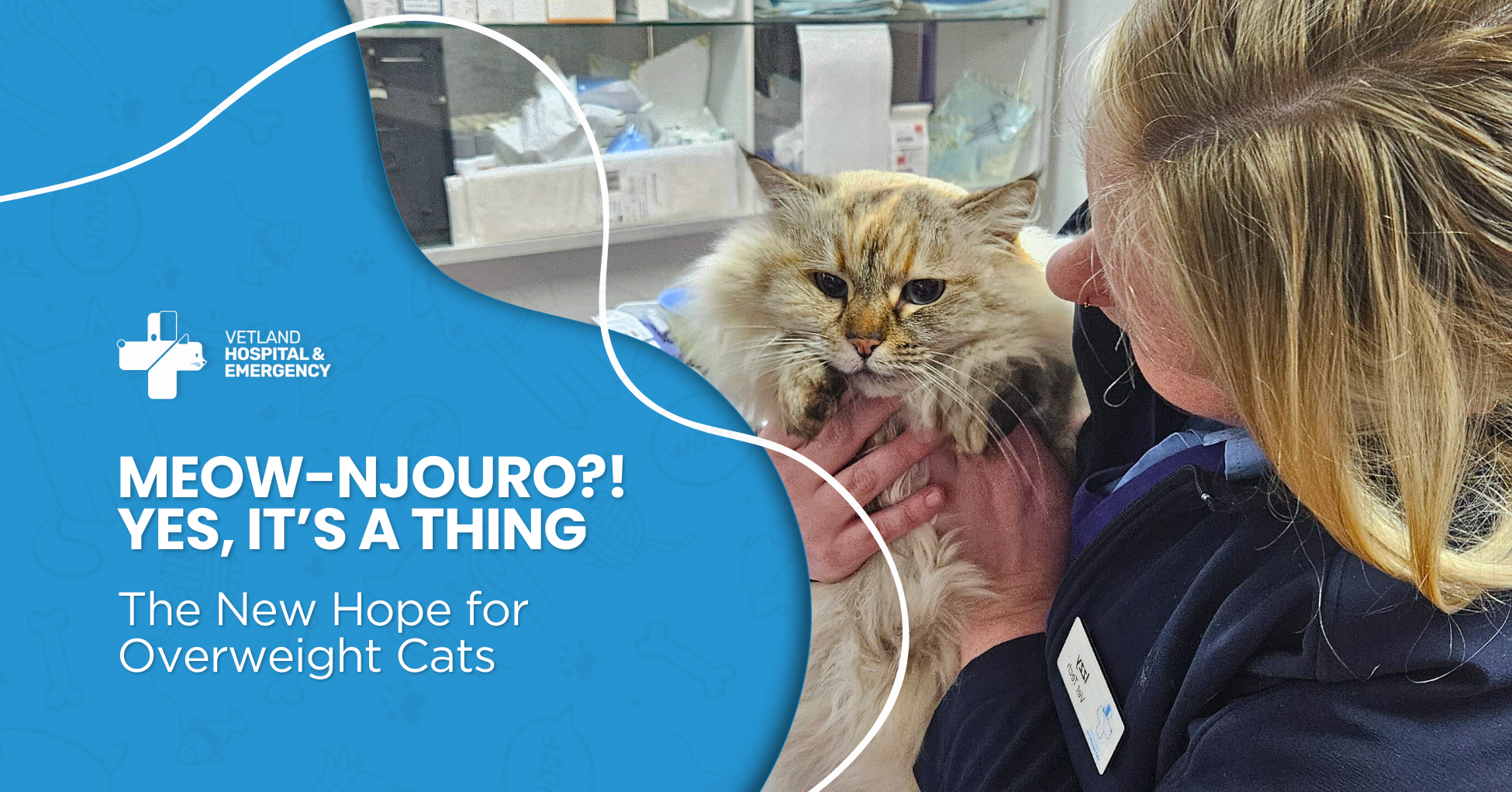
Is your cat getting a little too cozy with their snack bowl? You’re not alone — nearly half of Australia’s cats are now tipping the scales as overweight or obese, according to national studies.
And now, science is taking an unexpected turn: could the same revolutionary human weight-loss drugs, like Mounjaro and Ozempic, help our feline friends fight obesity too?
Let’s dig into this fascinating (and slightly controversial) development.
The Rise of the “Indoor Cat” Dilemma
Across Australia, around 41% of cats are classified as overweight or obese — and that number climbs to over 50% in middle-aged cats.
Whilst keeping cats indoors protects wildlife and prevents accidents, it also limits their natural activity. Pair that with constant access to calorie-dense dry food and post-neutering hormonal changes, and you’ve got the recipe for feline obesity.
Excess pounds aren’t just a cosmetic issue. Obesity shortens life spans and raises the risk of diabetes, arthritis, heart disease, urinary issues, and certain cancers.
Overweight cats are several-fold (up to ~7× in some studies) more likely to develop diabetes, and that added weight strains every joint and organ.
Why Losing Weight Is So Hard for Cats
Feline metabolism is surprisingly stubborn. Once cats become overweight, their bodies adapt to “defend” that weight — meaning calories must be cut drastically to see results.
Unfortunately, this can lead to malnutrition if not managed carefully. Even with strict diets, feline weight loss can be slow and frustrating — for both pet families, as well as the very hungry cat!
The ideal rate — just 0.5–2% of body weight per week — requires patience, precision, and often supplements to make up for nutritional deficiencies. In multi-cat homes, free-feeding and food sharing make success impossible.

GLP-1 Drugs: From Humans to Cats
Scientists are exploring a new frontier with GLP-1–based therapies — drugs that mimic gut hormones to curb appetite and balance blood sugar.
In people, medications like tirzepatide (Mounjaro) and semaglutide (Ozempic) have transformed weight management. The long-term effects—and benefits—of reduced obesity rates remain to be seen.
Clinical trials show Mounjaro helps people lose 15–22% of body weight over about 72 weeks, with many maintaining their results long-term.
Even adults with type 2 diabetes achieved up to 14.7% reduction, highlighting the power of this appetite-regulating approach.
Now, researchers are asking: could similar treatments safely help cats?
Cornell Leads the Feline Frontier
Cornell University’s College of Veterinary Medicine, one of the world’s most respected centres for feline research, is leading the charge with an 11-week trial of AKS-562c. The study tests a once-weekly GLP-1 Fc-fusion drug developed by Akston Biosciences.
Supervised by Dr Patrick Carney, DVM, PhD, the trial follows 70–140 client-owned cats, measuring weight loss, safety, and side effects under controlled diets.
According to Cornell, the medication is designed to stay active longer in cats, making it possible to give just one dose a week.
Early lab data have shown appetite reduction without significant adverse effects, making this one of the most anticipated studies in feline health.

A New Era for Feline Wellness?
If these studies continue to show promise, GLP-1–based therapies could redefine obesity care for cats — helping them stay healthier, more mobile, and more vibrant for longer.
But for now, the most powerful tools remain the basics:
- Measured portions to prevent overeating
- Daily play to boost activity and metabolism
- High-quality nutrition that supports healthy weight management
The future looks bright and exciting (and a little slimmer) for our feline companions — and we’ll be watching every whisker of progress.
Would you give your cat GLP-1 therapy?
It’s certainly a question of great contention, but the impact of feline obesity isn’t.
If you’re concerned about your cat's body condition, booking a veterinary assessment can help create a personalised, healthy weight strategy before symptoms develop.




/Graphics/Logos/Vetland/Logo_Default_200x100.png?width=150&height=75&name=Logo_Default_200x100.png)
 VetLand Hospital & Emergency
 VetLand Hospital & Emergency: Sep 14, 2026, 3:30:51 PM
.png)