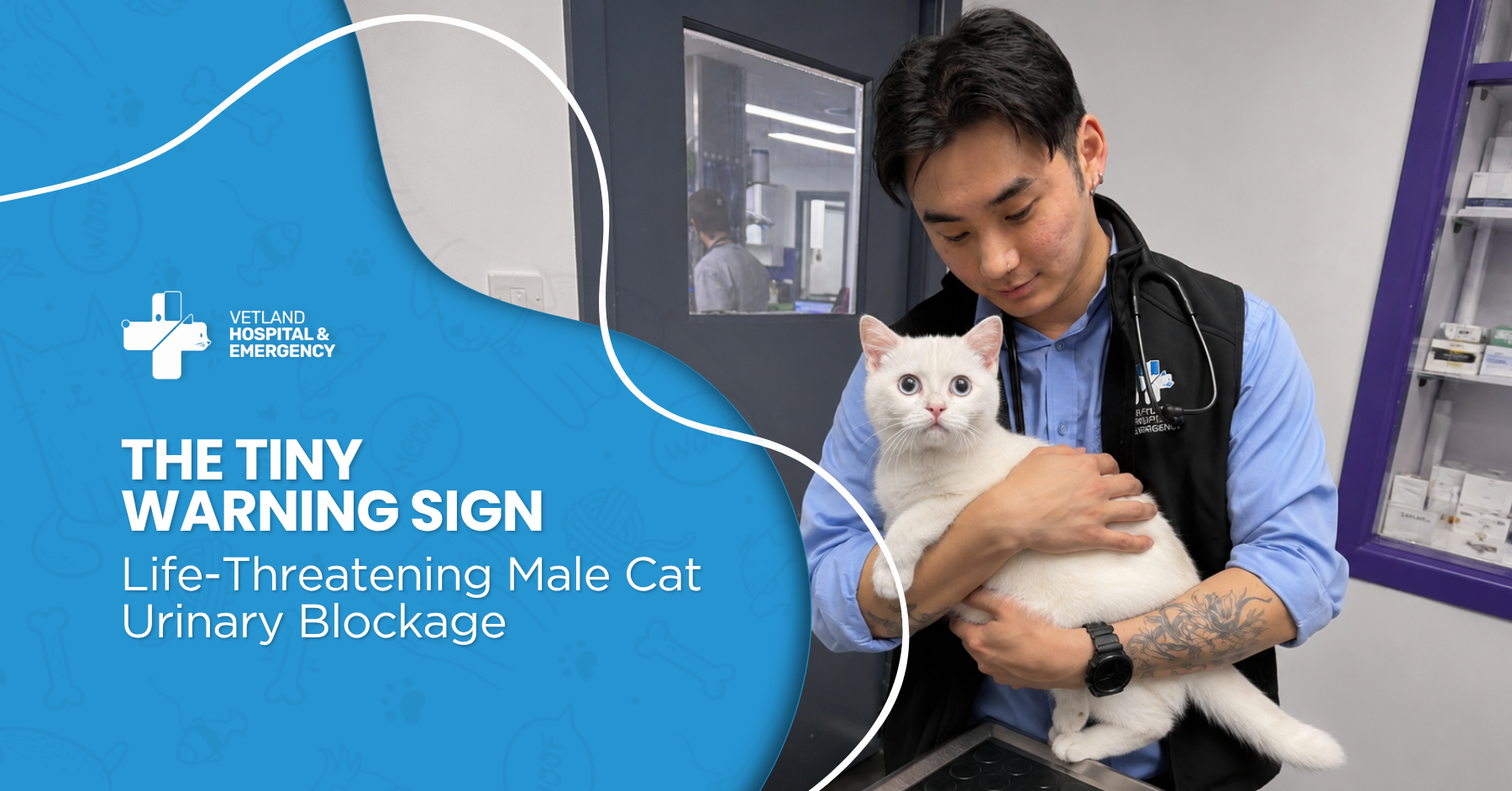
If your male cat keeps visiting the litter tray without producing urine, this could be a life-threatening male cat urinary blockage. At Vetland Hospital & Emergency, we see this frightening emergency every single week.
Male Cat Urinary Blockage: Why Waiting Overnight Can Turn Deadly
It’s 7:00 PM, and a worried pet parent rushes through our emergency doors with a familiar concern. “He’s been going in and out of the litter box all evening. I think he’s constipated.”
Inside the emergency room, those words immediately raise alarm bells for our veterinary team. More often than not, these cats aren’t constipated at all.
He is suffering from a Feline Urethral Obstruction (FUO), meaning he physically cannot urinate. Without urgent treatment, toxins rapidly build up inside the body and begin damaging vital organs.
The most dangerous mistake we see is waiting overnight, hoping symptoms will simply disappear. Unfortunately, with urinary blockages, time is never on your cat’s side.
As pressure builds inside the bladder, the consequences can become catastrophic within only a few hours.
Why Male Cats Become Blocked
Male cats are especially vulnerable to urinary blockages because their urethra is extremely narrow. Even a tiny amount of inflammation, crystals, mucus, or debris can completely stop urine from passing.
Several underlying factors can increase the risk of a blockage, including:
- Stress and anxiety from household changes, new pets, loud environments, or boredom
- Dehydration, especially in cats that drink very little water
- Diets made up mostly of dry food, which can lead to concentrated urine
- Urinary crystals or bladder stones that irritate or obstruct the urinary tract
- Chronic bladder inflammation and feline urinary disease
- Obesity and low activity levels, which may contribute to urinary problems
Once a blockage forms, the bladder rapidly becomes dangerously overfilled, and toxins begin building up throughout the body.
That’s why early recognition, proper hydration, stress reduction, and regular veterinary care are so important for protecting your cat’s urinary health.
The Clinical Consequences Are Severe
Once blocked, a cat’s condition can deteriorate frighteningly fast.
- Hyperkalemia: This dangerous potassium spike occurs because the cat cannot pass urine normally. Excess potassium acts like a “brake” on the heart, causing fatal arrhythmias or cardiac arrest.
- Bladder Rupture: A blocked bladder becomes painfully overstretched and dangerously tense. In severe cases, the bladder can tear or rupture, creating a surgical emergency.
- Kidney Failure: Backward pressure from the obstruction rapidly damages delicate kidney tissue. In some cats, this damage becomes permanent despite treatment.
Is It an Emergency?
If you share your home with a male cat, becoming a careful observer could save his life. Straining, crying inside the litter tray, or repeatedly licking underneath are all serious warning signs.
Takeaway: One of the biggest dangers is assuming your cat is simply constipated or uncomfortable. If your cat is pushing and nothing is coming out, treat it as an emergency immediately.
The good news is that early intervention dramatically improves survival and recovery outcomes. We can place a catheter, relieve the blockage, flush toxins, and stabilise dangerous electrolyte changes before they become irreversible.
Sometimes, acting quickly truly becomes the difference between a short hospital stay and a heartbreaking goodbye.




/Graphics/Logos/Vetland/Logo_Default_200x100.png?width=150&height=75&name=Logo_Default_200x100.png)
 VetLand Hospital & Emergency
 VetLand Hospital & Emergency: Sep 14, 2026, 3:30:51 PM
.png)