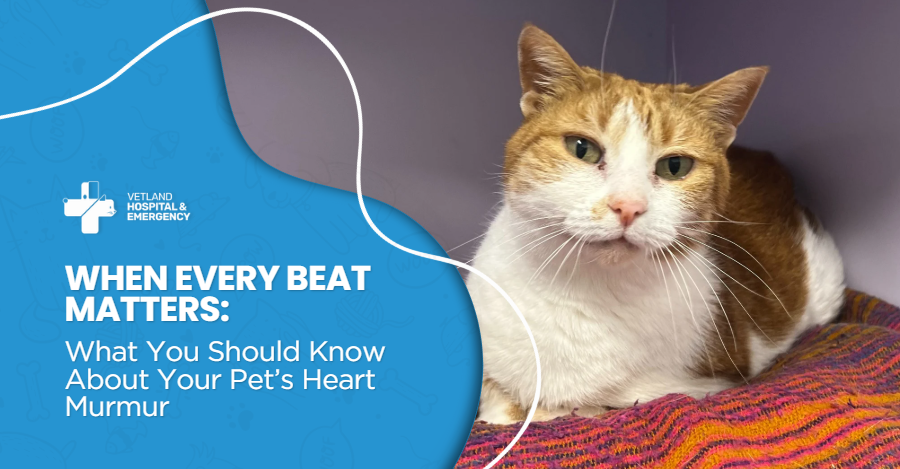
Hearing that your pet has a heart murmur can sound scary.
Having said that, did you know that heart murmurs are incredibly common in both dogs and cats—and that many pets live long, happy lives with them?
Having said that, heart murmurs are a serious matter - here’s what you need to know when you hear the words, ‘your pet has a heart murmur’.
Understanding What a Heart Murmur Means
A heart murmur is an extra beat sound your vet hears through a stethoscope. Blood travels in one direction through the heart; the extra beat heard is when there is turbulence, and some blood has gone backwards.
What’s most important to know is this: whilst a heart murmur is serious, it isn’t necessarily a death sentence. It means your pet’s heart deserves a closer look and regular care.
Get a Diagnosis
Heart murmurs can happen for lots of reasons—from enlarged hearts, dodgy valves or holes in the heart—and more. If your pet has been diagnosed with a heart murmur—this is the same as being diagnosed with a ‘cough’—it is merely a symptom.
Further testing, such as an ultrasound or X-rays of the heart, will be needed to gather more information about the root cause. From here, a tailored management plan can be formulated, unique to your pet’s heart condition.

Be Proactive
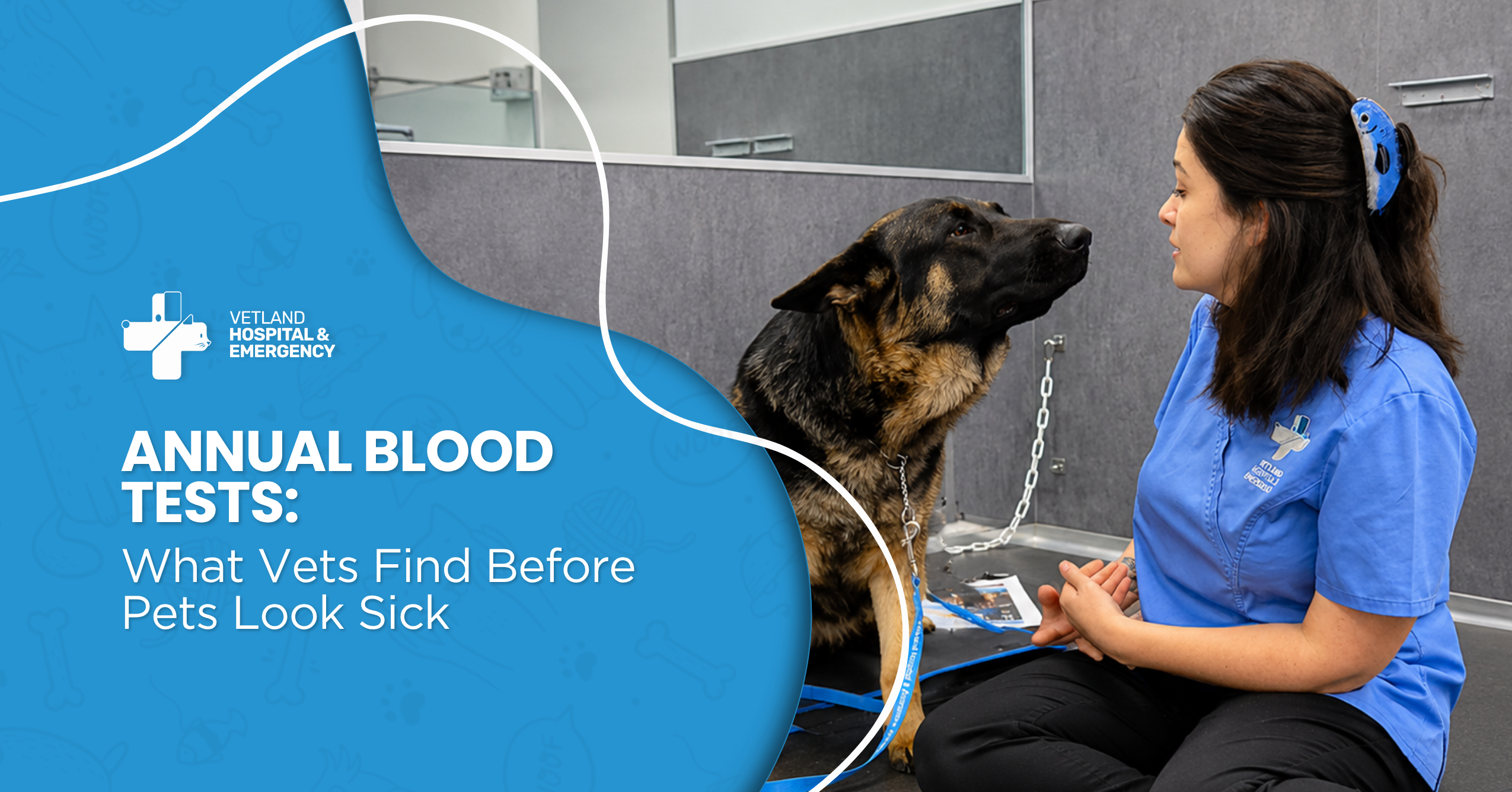
Heart murmurs are very significant should your pet require any medical treatment, especially anaesthesia or surgery. Be sure to always disclose them to your treating veterinarian, as some murmurs can be very quiet and difficult to hear—especially in wriggly cats or panting dogs.
For dogs, regular check-ups with annual blood tests and echocardiography (heart ultrasound) can help your vet measure heart health.
Tests such as cardiac biomarkers or troponin levels show how much stress the heart is under. Once we see signs of heart enlargement, medication becomes important.
These treatments can delay progression and protect your pet from developing heart failure—but the changes happen quietly.
Most dogs won’t show any outward symptoms until the disease is advanced, which is why early imaging is so valuable.
For Our Feline Friends
In cats, heart disease can look different. While we have fewer medication options, early detection still saves lives.
Cats with murmurs may be at risk of blood clots, high blood pressure, or sudden blindness caused by retinal damage.
Annual echocardiograms help identify cats at higher risk so treatment can start early. For some, anti-clotting therapy prevents dangerous and sometimes fatal blood clots that can strike the legs or brain without warning.
Newer therapies for feline cardiac disease have been released in the US—we are eagerly watching from Australia, with hope in our hearts.
What You Can Do at Home
You can play an active role in your pet’s heart health. When your pet is in deep sleep, count their breaths for a minute. Fewer than 24 breaths per minute is normal; more than that could signal concern.
The Cardalis app can help you track this weekly and store your results. It’s a simple way to notice changes early and share them with your vet.
Just like every muscle in the body, the heart thrives with excellent nutrition. Keep your pet at a healthy weight, provide high-quality food, and include natural anti-inflammatory nutrients to support long-term heart health.

Care That’s Close to the Heart
At Vetland Hospital & Emergency, we’re here to make lifelong heart care affordable and accessible.
Through our Furever Medications program, we help families manage the cost of ongoing prescriptions while keeping pets safe under veterinary supervision.
If your pet has a known murmur—or if you’ve noticed changes in their breathing, activity, or appetite—don’t wait. Every heartbeat matters.

Your pet’s heart deserves care that’s as devoted as their love for you.


/Graphics/Logos/Vetland/Logo_Default_200x100.png?width=150&height=75&name=Logo_Default_200x100.png)
 VetLand Hospital & Emergency
 VetLand Hospital & Emergency: Sep 14, 2026, 3:30:51 PM
.png)