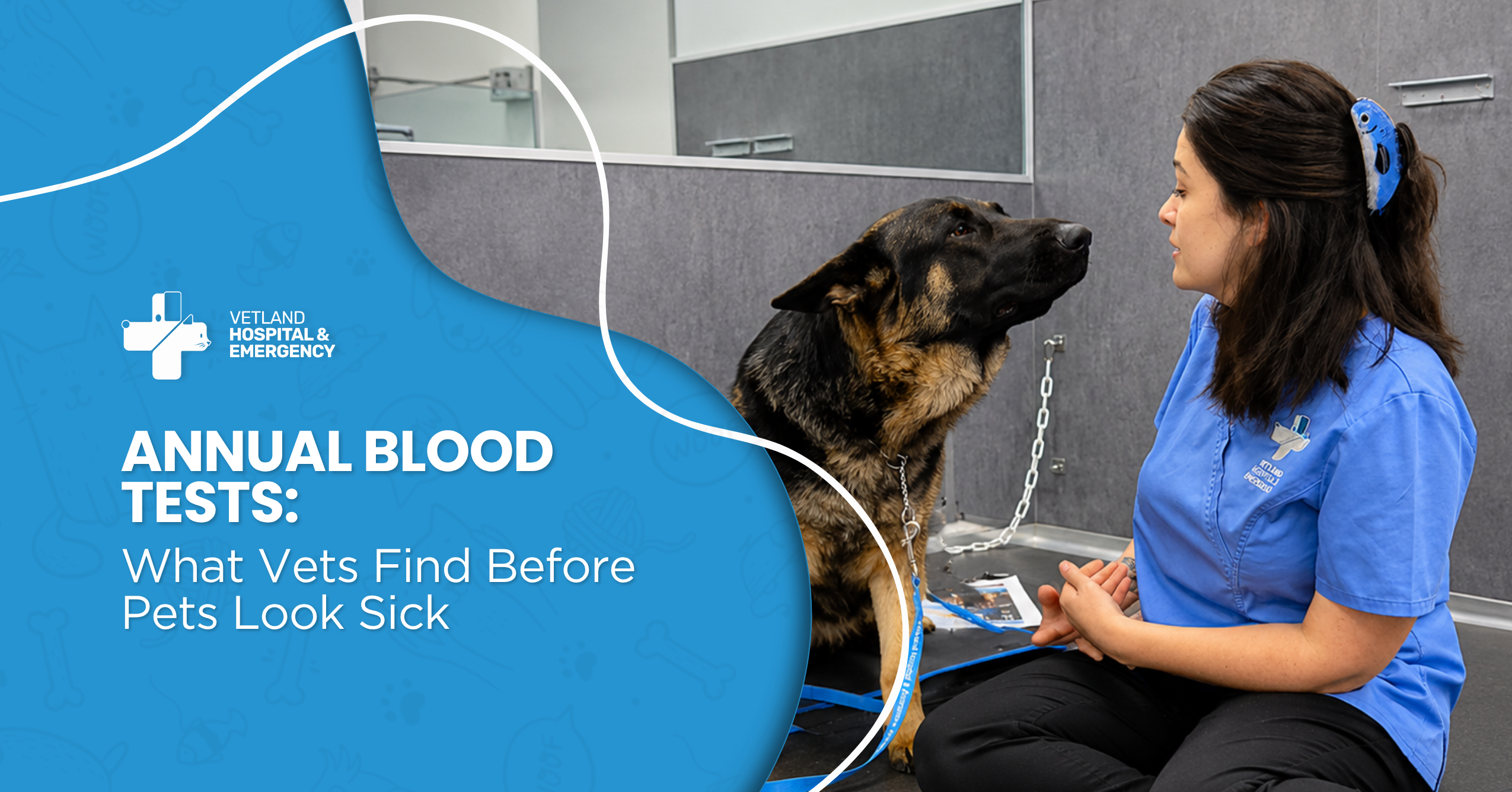
Even our vets don’t all feed the same way—and there’s a good reason, nutrition really isn’t a one-size-fits-all solution.
That doesn’t change the reality that choosing the right food can feel overwhelming. Kibble or raw? Grains or no grains? Big corporate brands, or small boutique start-ups?
At VetLand Hospital & Emergency, we know there’s no one-size-fits-all. So, we asked our team what they feed their pets, and the answers might surprise you.
There’s No One-Size-Fits-All
Feeding choices vary widely even among vets. They base nutrition on each pet’s age, health, and what helps them thrive.
Dr. Vicky, who shares her home with a senior Devon Rex, a blind Poodle, and a growing Frenchie, explains:
“I use a base of premium commercial dry food because I’m time-poor. But I love supplementing with fresh, whole foods—vegetables, lean meats, fruits—often just a bit of what I’m already preparing for the family.”
Others on our team take a similarly personalised approach. Jess feeds her Whippet and Greyhound a working-dog formula to support their weight and higher metabolic needs.
Client experience expert Maddy chooses prescription diets as her cats have very specific medical concerns, where the right food reduces their reliance on medications. And for her elderly husky? Fish oil provides osteoarthritic support.
Then there’s Dr. Hagar selects food backed by science and adds greenie dental chews for daily oral care.
It’s Not About Perfection—It’s About What’s Right
Every pet is different. Some have sensitive tummies, others need help managing weight or joint issues. Some parents want the convenience of kibble.
Others love to unlock the power of nature’s superfoods by feeding on raw or fresh foods. What matters most is choosing a diet that works for your pet—and for you.
Dr. Renier, who feeds a combination of kibble and raw, says: “Raw food with the correctly selected bones can be amazing for teeth. I stick to trusted brands with science behind them.”
And Dr. Hardie adds: “There’s a misconception that dry food isn’t as good as raw. That’s not always true. For me, it’s about balance and what works for my dog’s needs, along with a few Greenies for extra support.”

For Dr. Hardie, it’s all about balance—grounded in science, tailored to her dog’s needs, with a mix of dry and wet food plus a few Greenies for extra support.
Myth-Busting From the Vet Team
We asked the team to share some common pet food myths they wish more pet parents understood:
- Grains aren’t always bad: "Not all grain-inclusive foods are harmful. It’s about the quality,” says Maddy. Grain allergies are rare among dogs and cats.
- Raw doesn’t automatically mean better: Raw diets must be carefully managed to avoid nutritional gaps and hygiene risks.
- Food allergies usually come from proteins, not grains, says Dr. Hagar. Chicken, beef, and lamb are common triggers. Rotate protein sources to help minimise allergy risk.
- “Keep your pet’s diet consistent” can be misleading. Grocery brands meet basic needs but often lack nutrient density. Premium and vet diets use higher-quality ingredients and offer better absorption, coat health, and targeted medical support.
Gut Microbiome Health is Vital
Dr. Vicky explains that a pet’s gut microbiome is home to an extensive and complex ecosystem of microbes (bacteria, yeasts, and more).
The gut plays critical roles in digestion, mood, skin, and even immunity. It’s not something to ignore—it’s a superhighway to good health.
Support gut health with whole food ingredients, prebiotics (dietary fibre), and, where appropriate, probiotics (beneficial live bacteria).
This helps reduce the risk of allergies and nutritional imbalances, giving both dogs and cats their best shot at long-term well-being.
What’s Best for Your Pet?
There’s no single “right” way to feed your four-legged friend—but there is a way that’s right for them.
Whether you’re unsure about your current diet or just want to understand your options, our team is here to help.
Let’s take the guesswork out of mealtime—together.


/Graphics/Logos/Vetland/Logo_Default_200x100.png?width=150&height=75&name=Logo_Default_200x100.png)
 VetLand Hospital & Emergency
.png)
.png?width=380&height=620&name=Website%20Photo%20(1).png)
 VetLand Hospital & Emergency: Sep 14, 2026, 3:30:51 PM
.png)